
Common Accumulator Betting Mistakes: What Kills Your Bets (And How to Fix Them)
 Available in US
Table of Contents
- Accumulator Mistakes: Why Most Bettors Keep Losing Their Accas
- Mistake 1: Building Accumulators Around Favorites You Haven’t Actually Researched
- Mistake 2: Ignoring the Draw When It’s the Most Likely Outcome
- Mistake 3: Betting Too Early Without Waiting for Team News
- Mistake 4: Adding “Just One More Selection” to Boost the Odds
- Mistake 5: Not Accounting for Bookmaker Margin Compounding
- Mistake 6: Betting on Matches You Haven’t Watched or Properly Analyzed
- Mistake 7: Overrating Recent Form Without Context
- Mistake 8: Failing to Consider Motivation and What’s at Stake
- Mistake 9: Not Using Stop-Loss Discipline When Losing Streaks Hit
- Mistake 10: Mixing Different Bet Types Without Understanding the Implications
- Mistake 11: Not Exploiting Cash-Out Opportunities When They Actually Make Sense
- Mistake 12: Betting on Accumulator Promotions Without Reading the Terms
- The Meta-Mistake: Not Tracking Your Bets and Learning From Failures
- Accumulator Mistakes: Summary and How to Fix Your Betting Habits
Accumulator Mistakes: Why Most Bettors Keep Losing Their Accas
Let me tell you about the most expensive accumulator I ever placed. Six selections, all looking absolutely solid. I’d done my research, checked the form, analyzed the matchups. Combined odds of 43.2. A tenner could win me four hundred quid. I was buzzing.
Five legs won. Five out of six. The final match was a routine home banker—heavy favorites against a team with nothing to play for. Should have been a formality. Except I hadn’t checked that the home team had already secured their league position and were resting half their first team for an upcoming cup final. They lost 2-0 to a team of kids and reserves.
Four hundred quid down the drain because I made one stupid, avoidable mistake. I didn’t check the team news properly. That’s it. That’s all it took to turn a winning accumulator into a complete failure.
Here’s the thing about accumulator betting mistakes—they’re rarely dramatic. Nobody loses because of some catastrophic error that’s obvious in hindsight. You lose because of small oversights, lazy assumptions, and the kind of shortcuts that seem harmless until they cost you money.
I’ve been tracking my accumulator bets for years now. Every win, every loss, every near-miss that still stings months later. And when I reviewed hundreds of failed accumulators, patterns emerged. The same mistakes kept appearing. Different matches, different teams, different competitions—but the same fundamental errors.
Most betting guides will list obvious mistakes like “betting drunk” or “chasing losses.” Yeah, don’t do those things. But those aren’t the mistakes that actually drain your bankroll. The real killers are subtler. They’re the errors that feel like you’re being smart and strategic when actually you’re sabotaging yourself.
This article is about those mistakes. The ones I’ve made repeatedly and watched countless other bettors make. The ones that cost you money not because you’re reckless or stupid, but because you don’t realize you’re making an error until it’s too late.
Some of these will hit close to home. You’ll recognize your own betting patterns and realize you’ve been doing things wrong for years. That’s uncomfortable, but it’s also the first step toward actually improving.
Ready to stop making expensive mistakes? Let’s get into it.
Mistake 1: Building Accumulators Around Favorites You Haven’t Actually Researched
This is the number one accumulator killer, and almost everyone does it. You’re building your accumulator, you’ve got three or four solid selections that you’ve researched properly, and then you think “I need one more leg to boost the odds.” So you scan the fixtures, spot a heavy favorite at 1.3 odds, and throw it in.
“Manchester City are at home to a relegated team. They’ll definitely win that.” And you add it to your accumulator without doing a single minute of research beyond glancing at the league table.
Sometimes City do win. Often they do. But not often enough to justify building them into your accumulator based on nothing but their name and league position.
Here’s why this is such a toxic mistake: short-priced favorites lose more often than their odds suggest. Bookmakers shade these odds specifically because they know casual bettors will pile onto big-name teams regardless of circumstances. The odds aren’t reflective of true probability—they’re reflective of public betting patterns.
But beyond that, adding a selection you haven’t researched is like building your house on sand. You’ve done the work for your other selections. You understand why they represent value. Then you chuck in a random favorite and hope for the best.
Maybe City are resting players for a Champions League match midweek. Maybe their key striker is carrying a knock. Maybe the opposition have switched managers and are playing with nothing to lose and everything to prove. You wouldn’t know because you didn’t check.
I’ve lost more accumulators to these “banker” selections than to any other single factor. The match I didn’t really care about, included just to pad out the accumulator, is inevitably the one that lets me down.
The fix is simple but requires discipline: research every selection to the same standard, or don’t include it. No exceptions for “obvious” favorites. No shortcuts because you’re in a hurry. If you can’t justify why a selection belongs in your accumulator beyond “they should win,” it doesn’t belong there.
Your accumulator is only as strong as your weakest selection. One lazy choice undermines everything else.

Mistake 2: Ignoring the Draw When It’s the Most Likely Outcome
Match result betting is three-way. Home win, draw, away win. But most accumulator bettors think in binary terms—either their team wins or they don’t. The draw becomes this annoying third possibility that they just hope won’t happen.
Wrong mindset. Completely wrong.
In many matches, the draw is actually the single most likely outcome. Two evenly matched mid-table teams with nothing particular to play for? Draw is probably the most probable result, even if the bookmaker’s odds suggest otherwise because they know nobody wants to bet on draws.
If you’re backing a team to win in a match where the draw is a realistic outcome, you need to acknowledge that risk and factor it into your accumulator planning.
This is why smart accumulator bettors gravitate toward two-way markets. Asian handicap removes the draw entirely. Over/under goals is binary—either it goes over the line or it doesn’t. Both teams to score is yes or no.
These markets force you to think about the actual probability distribution rather than just hoping your team wins and the draw doesn’t happen.
I’m not saying never bet on match results. Sometimes it’s the right market. But if you’re including match result selections in your accumulator, you better have a damn good reason why you think the draw is unlikely. Not just wishful thinking. Actual analysis based on how both teams set up, their recent scoring patterns, their motivation levels.
The number of accumulators I’ve seen die to draws that were entirely predictable is staggering. Two defensive teams playing each other? That’s ending 0-0 or 1-1 more often than not. Don’t back either team to win and then act shocked when they cancel each other out.
Use two-way markets where possible. When you must use three-way markets, properly assess draw probability rather than pretending it doesn’t exist.
Mistake 3: Betting Too Early Without Waiting for Team News
Team news in major leagues typically drops one hour before kick-off. If you’re placing your accumulator Friday evening for Saturday matches, you’re betting blind on team selection.
This is gambling, not informed betting.
A single absent player can completely change a match. If you’ve backed Arsenal to win but their main striker isn’t starting, your probability assessment is wrong. If you’ve backed under 2.5 goals but both teams are playing attacking lineups, your assessment is wrong.
I know why people bet early. You’ve done your research during the week, you’ve identified your selections, you want to lock in the odds before they potentially shorten. Plus it’s more convenient than waiting around on Saturday afternoon.
But convenience costs money. Every accumulator you place without complete team information is an accumulator placed with incomplete data.
The professional bettors I know place their accumulators as late as possible. They do their research in advance, they identify their target selections, but they wait until team news is confirmed before actually placing the bet.
Sometimes this means the odds have moved against them by the time they bet. That’s fine. If odds have shortened significantly, it usually means other informed bettors spotted the same value. The edge has disappeared. Better to miss a bet than force a bad one.
But often, odds don’t move dramatically in that hour between team news and kick-off. Most recreational bettors have already placed their bets. You’re operating in a window where you have better information than the majority of the market.
The discipline required here is annoying. You can’t just fire off your accumulator whenever you feel like it. You need to wait, you need to check multiple sources for team news, you need to verify starting lineups before confirming your bet.
But this discipline separates bettors who consistently profit from those who consistently lose. Information is edge. Use it.

Mistake 4: Adding “Just One More Selection” to Boost the Odds
You’ve built a solid four-fold accumulator. Combined odds around 8.0. Respectable return if it comes in. Then you look at the fixtures again and think “if I just add one more leg, I could get to 15.0 odds. That’s almost double.”
So you add a fifth selection that doesn’t quite meet your standards but seems good enough. And that marginal fifth selection is exactly what lets you down.
This is the greed trap, and it’s absolutely everywhere in accumulator betting.
The mathematics are clear: every additional selection reduces your probability of winning. If your four-fold has a 12% chance of success, adding a fifth selection at 1.8 odds drops you to about 7%. You’ve almost doubled your odds but you’ve reduced your win probability by 40%.
Is that trade-off worth it? Sometimes yes, if that fifth selection is genuinely strong value that you’d be happy to bet on as a single. But usually no, because you’re adding it purely for the odds boost rather than because it meets your selection criteria.
I have a personal rule now: once I’ve identified four solid selections, I stop looking. I don’t scan for “one more” to pad the odds. Four is the accumulator. If I later spot a fifth selection that’s absolutely compelling, I’ll build a separate accumulator. But I don’t add selections just to chase higher returns.
The best accumulators are built from selections that each individually represent value. When you start adding selections purely for odds multiplication, you’re undermining the entire structure.
Think of it this way: if you wouldn’t bet on that selection as a single, why are you including it in your accumulator where it can kill the entire bet?
Be disciplined. Build your accumulator from genuine value selections. When you’ve got enough, stop. Don’t chase bigger numbers just because they look attractive on the bet slip.
Mistake 5: Not Accounting for Bookmaker Margin Compounding
Every bet you place with a bookmaker includes built-in margin. On a typical football match, this margin might be around 5-6%. The bookmaker’s edge.
Most bettors understand this for single bets. What they don’t understand is how that margin compounds in accumulators.
If you place four single bets with 5% bookmaker margin each, you’re giving away 5% on each bet. Not ideal, but manageable.
If you place a four-fold accumulator with those same selections, the margin compounds. It’s not 5% anymore—it’s closer to 20%. The bookmaker’s edge multiplies through each leg of your accumulator.
This is the mathematical reason why bookmakers love promoting accumulators. The compounding margin works massively in their favor. The bigger the accumulator, the worse your expected value becomes.
So what do you do about it? Two things.
First, be even more selective about which bets make it into your accumulators. Every selection needs to be genuinely strong value to overcome the compounding margin. Marginal bets that might be acceptable as singles become toxic in accumulators.
Second, limit your accumulator size. The four-to-six selection range isn’t just about win probability—it’s also about limiting how much margin compounds against you. Ten-leg accumulators aren’t just unlikely to win—they’re mathematically terrible value even when they do win.
You can’t eliminate bookmaker margin. But you can understand how it works and make strategic decisions to minimize its impact.
Mistake 6: Betting on Matches You Haven’t Watched or Properly Analyzed
Be honest: how many selections in your last accumulator were based on you actually watching those teams play recently?
If the answer is “none” or “one maybe,” you’re not betting informed—you’re guessing with extra steps.
Results tell you almost nothing useful. A team winning 2-0 could mean they dominated or got lucky with two set pieces against the run of play. You can’t tell from the scoreline.
Modern football statistics help. Expected goals, shot maps, possession adjusted for quality of opponent—these give you actual insight into performance beyond the final score.
But even statistics have limits. They don’t show you that the team’s formation is chaotic, that players aren’t communicating, that the manager has lost the dressing room. You need to watch matches or at minimum read detailed tactical analysis from people who did watch.
This sounds like a lot of work because it is. If you’re building a four-fold accumulator, you need detailed knowledge of at least eight teams (both sides in each match). That’s eight teams’ recent form, tactical approach, injury situations, motivation levels.
Most bettors aren’t willing to do this work. They glance at league tables, check recent results, make assumptions based on team names.
Those bettors lose. Consistently.
The bettors who win are the ones putting in the research hours that everyone else can’t be bothered with. They’re not smarter or luckier—they’re just more thorough.
If you’re not willing to properly analyze every match in your accumulator, don’t bet on it. Seriously. Your bankroll will thank you for passing on matches you don’t understand rather than betting on them anyway and hoping for the best.

Mistake 7: Overrating Recent Form Without Context
“Team X has won five in a row—they’re in brilliant form, definitely backing them.”
Okay. Who did they beat?
Oh, the bottom three teams in the league, all of whom were missing key players, and two of the matches were against ten men for significant portions?
That’s not form. That’s luck with a cherry-picked sample.
Form analysis is one of the most misused concepts in football betting. People look at a run of results and assume it’s predictive without considering any context.
Real form analysis involves understanding why results happened. Were they playing weak opposition? Did they get fortunate with refereeing decisions? Were the underlying performance metrics good or did they win despite being outplayed?
A team can win three matches in a row and actually be in terrible form if they were fortunate each time. Conversely, a team can draw two and lose one while actually improving significantly if they were unlucky.
Expected goals and other advanced metrics help cut through the noise. A team consistently outperforming their xG is probably getting lucky. A team consistently underperforming their xG is probably due positive regression.
But even metrics need context. You need to know if they were playing against high or low blocks, whether they were chasing the game or protecting a lead, whether conditions were normal or unusual.
Form matters, but only when you understand what’s driving it. Raw results without context are just noise.
Before including a team in your accumulator based on “good form,” dig deeper. Make sure that form is sustainable based on how they’re actually playing, not just the results they’re getting.
Mistake 8: Failing to Consider Motivation and What’s at Stake
End of season, one team has secured their league position and has nothing to play for. Their opponents are fighting relegation and need the points desperately.
Who do you think is more likely to win?
If you said “depends on which team is better,” you’re missing the point. Motivation is huge, especially in matches where one side needs the result far more than the other.
This applies throughout the season, not just in end-of-season scenarios. A team playing in a cup final four days after your match might rest half their squad. A team chasing European qualification will approach matches differently from a team in comfortable mid-table.
You need to ask: what does each team need from this match? What’s at stake for them? Where are their priorities?
Sometimes the answer is obvious. Sometimes it requires understanding the broader context of their season, their financial situation, their cup competitions.
I’ve seen bettors back strong teams to win matches they clearly didn’t care about, then act shocked when they rotated heavily and lost. The information was there. They just didn’t consider it important enough to check.
Motivation doesn’t guarantee outcomes. A motivated relegation candidate isn’t definitely going to beat a superior team that doesn’t care. But it shifts probabilities significantly, and those probability shifts matter.
Always check what’s at stake for each team. What are they playing for? What do they need? Where are their priorities? Factor this into your assessment rather than just comparing team quality on paper.
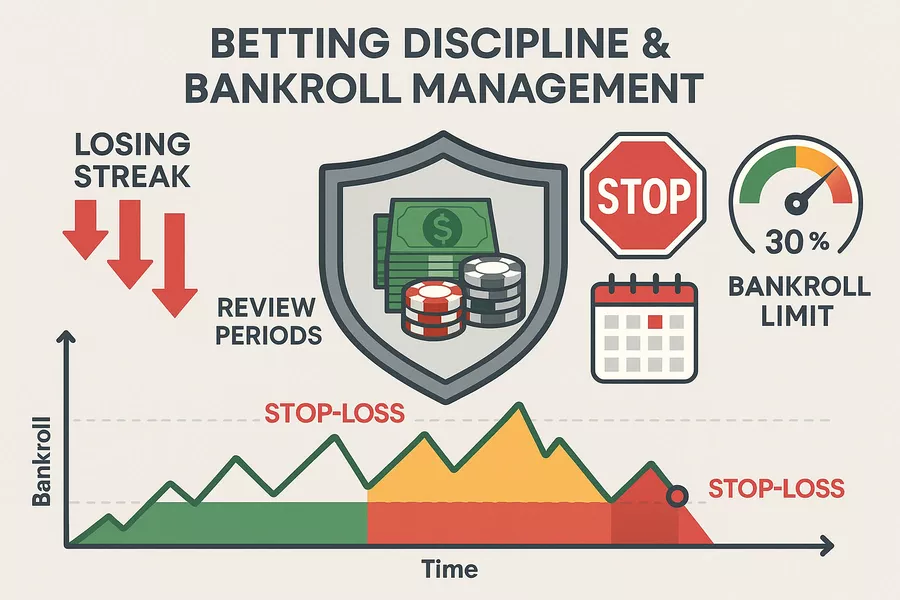
Mistake 9: Not Using Stop-Loss Discipline When Losing Streaks Hit
Losing streaks are inevitable in accumulator betting. Even with perfect strategy, you’ll hit runs where nothing comes in. Five, ten, even fifteen consecutive losing accumulators aren’t just possible—they’re probable over any reasonable timeline.
The mistake isn’t having losing streaks. The mistake is not having a predetermined plan for how to handle them.
Most bettors respond to losing streaks emotionally. They either chase losses by increasing stakes to “win it back,” or they completely abandon their strategy and start making desperate picks.
Both responses are toxic.
You need stop-loss discipline. Before you start betting, decide under what circumstances you’ll stop and reassess.
Maybe it’s a fixed number of losses. “After ten consecutive losing accumulators, I stop for a week and review whether my strategy is working.”
Maybe it’s a percentage of bankroll. “If I lose 30% of my starting bankroll, I stop and rebuild from the new baseline with smaller stakes.”
Maybe it’s a time-based review. “Every month I assess profit/loss. If I’ve had three consecutive losing months, I pause and figure out what’s going wrong.”
The specific triggers don’t matter as much as having them predetermined. You’re making these decisions when you’re rational and unemotional, so you can follow them when you’re frustrated and tempted to make bad choices.
Losing streaks test discipline more than anything else in betting. Having a stop-loss plan means you can survive those streaks without destroying your bankroll through emotional reactions.
Mistake 10: Mixing Different Bet Types Without Understanding the Implications
Your accumulator has three match result bets and one both-teams-to-score bet. One over/under goals bet and two Asian handicap bets. It’s all over the place.
Each of these bet types has different probability distributions and different ways they can win or lose. When you mix them randomly, you’re creating unnecessary complexity without any strategic benefit.
Match result bets can lose to draws. BTTS bets don’t care who wins. Over/under bets have a specific threshold. Asian handicaps can push (return stake) under certain conditions.
Each bet type interacts with match dynamics differently. A match ending 1-1 might be a winning BTTS bet but a losing match result bet. A match ending 3-2 might be a winning over/under but a losing handicap bet.
When you mix bet types, you’re not just increasing complexity—you’re making it harder to assess the overall probability of your accumulator succeeding.
This doesn’t mean never mix bet types. Sometimes it makes sense strategically. But it should be deliberate, not random.
Better approach: build coherent accumulators where the bet types align with your strategy. If you’re targeting high-scoring matches, maybe it’s all over/under goals bets. If you’re targeting strong favorites, maybe it’s all Asian handicap bets.
When your accumulator has internal coherence, you can better assess its overall quality and probability of success. When it’s a random collection of different bet types, you’re just hoping everything works out.
Mistake 11: Not Exploiting Cash-Out Opportunities When They Actually Make Sense
Cash-out functionality gets a bad reputation among serious bettors because bookmakers obviously price it in their favor. The offers are never generous. You’re always taking less than mathematically fair value.
But sometimes, taking cash-out is still the right decision.
Say you’re three legs into a four-fold accumulator. Everything’s won so far. Your final leg is a match between two evenly matched teams, and you’re backing the away team at 2.5 odds.
The bookmaker offers you 60% of maximum return as cash-out. You could take guaranteed profit now, or risk everything on a bet that’s basically a coin flip.
Most sharp bettors will tell you to never cash out because the offer is below fair value. They’re not wrong mathematically. But they’re ignoring the psychological reality that guaranteed profit feels very different from potential profit.
Here’s my approach: I calculate whether the cash-out offer is acceptable based on my assessment of the remaining legs’ true probability. If my final leg genuinely has 40% chance of winning (implied by 2.5 odds), and the cash-out offer is 60% of maximum, that’s roughly fair given that 60% chance of losing.
I still take less than I should, but I’m taking guaranteed money when the alternative is basically a coin flip. That trade-off can be worthwhile depending on my current bankroll situation and risk tolerance.
The mistake is either never using cash-out (even when it’s sensible) or using it reactively based on nerves rather than calculation. Have predetermined criteria for when you’ll cash out, then follow them.
Mistake 12: Betting on Accumulator Promotions Without Reading the Terms
“Accumulator insurance—if one leg loses, get your money back!”
Sounds great. But did you read the fine print?
- Only applies to accumulators with five or more selections
- Each selection must have minimum odds of 1/5
- Combined odds must be 3/1 or higher
- Maximum refund is £25
- Refund is as free bet, not cash
- Free bet must be used within seven days
- Free bet stake is not returned with winnings
Suddenly that “insurance” doesn’t look quite so generous.
Bookmaker promotions can offer genuine value if you understand exactly what you’re getting. But most bettors see “free money” and don’t read the extensive terms and conditions that limit how you can actually benefit.
Insurance only covers if exactly one leg loses. Two legs lose? No refund. Your five-fold needs to lose by precisely one selection to trigger the insurance.
Odds restrictions mean you can’t just throw in any selections—they need to meet minimum requirements. This forces you to build your accumulator around qualifying for the promotion rather than around finding value.
The free bet refund is worth roughly 80% of face value because you don’t get the stake back. A £20 refund is really only worth about £16 in actual value.
Time limits force you to use the free bet quickly, often before you’ve found good value bets worth placing.
All of this is fine if you understand it going in. The mistake is building your entire strategy around promotions without understanding their actual terms and limitations.
Read the terms. Calculate the true value after all restrictions. Then decide if the promotion is worthwhile. Often it is, but not nearly as worthwhile as the headline advertising suggests.
The Meta-Mistake: Not Tracking Your Bets and Learning From Failures
This is the mistake that prevents you from fixing all the other mistakes. You place accumulators, they win or lose, you feel good or bad about it, then you move on without analyzing what went wrong.
That’s insane. You’re guaranteed to repeat the same errors forever if you never identify what those errors are.
Keeping a betting journal is tedious and boring. Nobody enjoys it. But it’s the difference between improving over time and staying stagnant.
Every accumulator should be documented:
- What selections did you include and why?
- What were the odds at placement?
- What was your reasoning for each selection?
- Which legs won or lost?
- What went wrong with losing legs—bad luck or bad analysis?
- What would you do differently next time?
After reviewing fifty journal entries, patterns become obvious. You consistently lose on certain bet types. You consistently misjudge certain situations. You consistently make the same analytical errors.
Those patterns are gold. They’re your specific areas for improvement, identified through actual data rather than vague feelings.
Most bettors never improve because they don’t track systematically. They have a general sense that they’re losing money but no specific understanding of why. They can’t fix problems they haven’t identified.
Start tracking today. Every bet. Every outcome. Every lesson. It’s boring work that pays massive dividends over time.

Accumulator Mistakes: Summary and How to Fix Your Betting Habits
Accumulator betting is hard. The mathematics are against you. The bookmakers are sophisticated. The markets are efficient. You’re competing against thousands of other bettors and professional syndicates.
But most people don’t lose because the task is impossible. They lose because they make systematic, preventable mistakes.
Building accumulators around uninvestigated favorites. Ignoring draw probability. Betting too early without team news. Adding selections just for odds boost. Not understanding margin compounding. Betting without proper analysis. Misunderstanding form. Ignoring motivation. Lacking stop-loss discipline. Mixing bet types randomly. Misusing cash-out. Not reading promotion terms. Failing to track and learn.
Each mistake individually might not seem like much. But they compound. Five small errors in judgment, and what should have been a winning accumulator becomes another loss.
The good news? These mistakes are fixable. They’re not about lacking intelligence or having bad luck. They’re about having bad habits and poor processes.
Fix your processes, eliminate the systematic errors, and you’ll dramatically improve your results. Not overnight. Not with guaranteed wins. But gradually, measurably, sustainably.
Most bettors won’t do the work to fix these mistakes. They’ll keep making them week after week, wondering why they never win, blaming bad luck rather than bad process.
Don’t be most bettors. Identify which of these mistakes you’re making. Fix them one at a time. Track your improvements. Adjust based on actual results rather than feelings.
That’s how you go from losing consistently to at least having a chance of long-term profit. Not through magic or secrets, but through eliminating the avoidable errors that kill most accumulators before they even have a chance.
See also: accumulator-bet – improve your accumulator bets.
See also: Articles – explore all our accumulator betting guides.
Expertly verified: Mason Wright