
Best Sports for Accumulator Betting: Where Smart Money Actually Wins
 Available in US
Table of Contents
- Best Sports for Accumulators: Why Your Sport Choice Makes or Breaks Your Bet
- Football: The Accumulator King (When You Do It Right)
- Horse Racing: The Each-Way Accumulator Paradise
- Tennis: The Binary Brilliance of Two-Outcome Betting
- Basketball: High-Scoring Consistency Meets Accumulator Format
- Sports That Don’t Work Well for Accumulators
- Multi-Sport Accumulators: The Best and Worst Combinations
- Best Sports for Accumulators: Summary and How to Pick the Right Markets
Best Sports for Accumulators: Why Your Sport Choice Makes or Breaks Your Bet
I spent my first two years of accumulator betting exclusively on football. Premier League matches every weekend, the occasional Champions League midweek game, and the odd cup match when I was feeling adventurous. My results were mediocre at best. Not terrible, but not profitable either. Just endless near-misses and the occasional winner that kept me coming back.
Then one Saturday, all the football fixtures were postponed because of international break. Nothing to bet on. So I thought, why not try horse racing? I knew absolutely nothing about horses, but there were races on, and I fancied a punt.
That first racing accumulator lost spectacularly. I picked horses with names I liked and got absolutely battered. But something interesting happened—I started researching how horse racing actually worked. The form, the going, the jockey-trainer combinations, the different types of races.
Three months later, my horse racing accumulators were outperforming my football bets by a significant margin. Not because I’d suddenly become brilliant at racing. But because the market was less efficient, the field sizes created better opportunities, and my willingness to do proper research gave me an actual edge.
That experience taught me something crucial: the sport you’re betting on matters just as much as how you’re betting. Some sports are fundamentally better suited to accumulator betting than others. And it’s not always the ones you’d expect.
Most punters stick exclusively to football because that’s what they know. They’re missing opportunities in other sports where the accumulator format actually works better, where the markets are less efficient, where genuine value exists if you’re willing to learn.
This isn’t about abandoning football—it’s brilliant for accumulators when approached correctly. But it’s about understanding that different sports have different characteristics, and those characteristics determine whether accumulators make sense.
Some sports have match dynamics that suit accumulator betting perfectly. Others are basically designed to separate you from your money as quickly as possible. Knowing which is which will transform your results.
Let’s break down the best sports for accumulator betting, why they work, and how to approach each one strategically.
Football: The Accumulator King (When You Do It Right)

Football dominates accumulator betting in the UK, and there are genuinely good reasons why. Multiple matches happening simultaneously every weekend, familiar teams and leagues, abundant statistical data, and betting markets that offer reasonable liquidity.
But here’s the thing most people miss: not all football is created equal for accumulator purposes.
Premier League Saturday 3pm kick-offs? Absolutely terrible for finding value. Everyone’s betting on them, bookmakers have devoted enormous resources to pricing them accurately, and the market is so efficient that edges are razor-thin. You’re competing with professional syndicates and sophisticated betting operations.
Tuesday night Championship matches between mid-table teams? Much better. Far fewer people betting, less bookmaker attention on getting the prices perfect, and if you’re willing to do proper research, genuine opportunities exist.
The key insight is this: football works brilliantly for accumulators when you avoid the most popular matches and focus on markets where your research gives you an actual edge.
The markets that actually work for football accumulators:
Both teams to score is my favorite by miles. You’re betting on both teams being competent enough to find the net at least once. This removes the complexity of predicting who wins and instead focuses on offensive capability. Historical data for BTTS is abundant, patterns are fairly consistent, and it’s a two-way market that eliminates the draw.
Over/under 2.5 goals is another strong option. Again, you’re removing the complexity of match result and focusing on one variable—total goals. Some matches are clearly going over based on both teams’ recent scoring patterns and tactical approaches. Some are clearly staying under. The market is relatively predictable if you do the research.
Asian handicap markets remove the draw and give you effectively a two-way bet. A team either covers the handicap or they don’t. This improves your probability compared to three-way match result betting.
The markets to avoid like the plague:
Correct score accumulators are basically lottery tickets. The bookmaker margin is massive, the hit rate is abysmal, and you’re trying to predict something that’s hugely variant even when you’ve analyzed everything correctly.
First goalscorer bets have similar problems. Too many random factors, too much variance, margins too high. Occasionally someone hits one and it feels amazing, but over time they’re bankroll killers.
Anytime goalscorer is slightly better but still problematic. You’re betting on individual player performance in team contexts with tons of variables you can’t control.
League selection matters enormously:
Top five European leagues are the most efficient. Everyone’s betting on them, everyone’s watching them, everyone’s analyzing them. Finding value is difficult but not impossible if you’re extremely thorough.
Lower English leagues—League One, League Two—offer better opportunities. The markets are less efficient, fewer people are watching, and if you’re willing to put in research time, edges exist.
Scottish Premiership outside of Celtic and Rangers is underanalyzed. Same with lower tiers of German, Spanish, and Italian football. These are places where bookmakers set prices based on general principles rather than deep analysis, creating opportunities for informed bettors.
International football during qualifiers and friendlies can be decent. Motivation levels vary wildly, team selection is unpredictable, and the markets often misprice matches where one team doesn’t care about the result.
The timing trap:
Weekend matches attract the most betting volume, which means the sharpest prices. Midweek matches often have softer odds because bookmakers are dealing with lower volumes and less need to be perfectly accurate.
I’ve started focusing more on Tuesday and Wednesday matches for exactly this reason. Not because the football is better, but because the betting environment is more favorable.
The golden rule for football accumulators:
Only bet on matches you’ve actually researched properly. Not glanced at the league table—actually researched. Form in context, injury news, motivation levels, head-to-head records, tactical matchups. If you can’t justify a selection beyond “they should win,” don’t include it.
Football can be phenomenal for accumulators. But it requires selectivity, proper research, and avoiding the trap of betting on every available match just because they’re on TV.
Horse Racing: The Each-Way Accumulator Paradise

Horse racing is brilliant for accumulators, but in a completely different way from football. The dynamics are different, the markets are different, and the opportunities are different.
The magic of racing accumulators is the each-way option. You’re essentially placing two bets—one for your horses to win, one for them to place. If all your horses win, you get paid on both. If they all place but don’t all win, you still get paid on the place portion.
This completely changes the risk-reward profile. Instead of needing perfection across all selections, you can be successful with horses placing in second, third, or fourth depending on field size and bookmaker terms.
Why racing works so well for accumulators:
Field sizes create opportunities. A football match has two possible winners. A twenty-horse handicap has twenty possible winners, but bookmakers have to set odds for all of them. The complexity creates pricing inefficiencies.
Each-way terms are generous on big race days. Major festivals like Cheltenham, Royal Ascot, and Aintree offer extra places—sometimes paying down to fifth or sixth place. This dramatically increases your probability of getting paid something.
Form is more analyzable than people think. Yes, horse racing seems complex and intimidating if you’re new to it. But the factors that determine performance are fairly consistent. Going (track condition), distance preferences, jockey-trainer combinations, recent form in context, class drops or rises—these variables are knowable if you’re willing to learn.
The market is less efficient than football for certain race types. Big championship races get tons of attention and sharp pricing. Random weekday handicaps at Wolverhampton? Not so much. Value exists for those willing to look.
The race types that work best:
Competitive handicaps with large fields are perfect. Everybody has a chance, the bookmakers struggle to price it perfectly, and the each-way terms are generous. These are the races I target almost exclusively for accumulators.
Festival races during Cheltenham, Aintree, or Royal Ascot offer the best value. Enhanced place terms, promotional offers, and enough races on one day to build proper accumulators.
Novice hurdles and chases can be interesting but require different analysis. You’re assessing potential rather than proven form, which adds complexity.
The race types to avoid:
Two-horse races or anything with tiny fields. The each-way advantage disappears when there are only three or four horses. You need larger fields to make the probability work in your favor.
Seller and claimer races at the bottom level tend to be unpredictable. The horses are low quality, they’re inconsistent, and form is unreliable.
The learning curve is real:
I’m not going to pretend horse racing is easy. It took me months to understand what I was looking at. The terminology is confusing, the form guides look like hieroglyphics initially, and you’ll make tons of mistakes early on.
But the payoff is worth it. Once you understand racing fundamentals, accumulator opportunities are abundant. Every Saturday has multiple big race meetings with decent fields and generous terms.
The time investment matters:
Racing accumulators require more research time per selection than football. You’re analyzing multiple horses in each race, understanding their profiles, checking going conditions, reviewing jockey bookings.
But that investment is what creates edge. Most casual racing bettors pick based on names, colors, or lucky numbers. If you’re willing to do actual form analysis, you’re already ahead of 90% of the market.
Tennis: The Binary Brilliance of Two-Outcome Betting
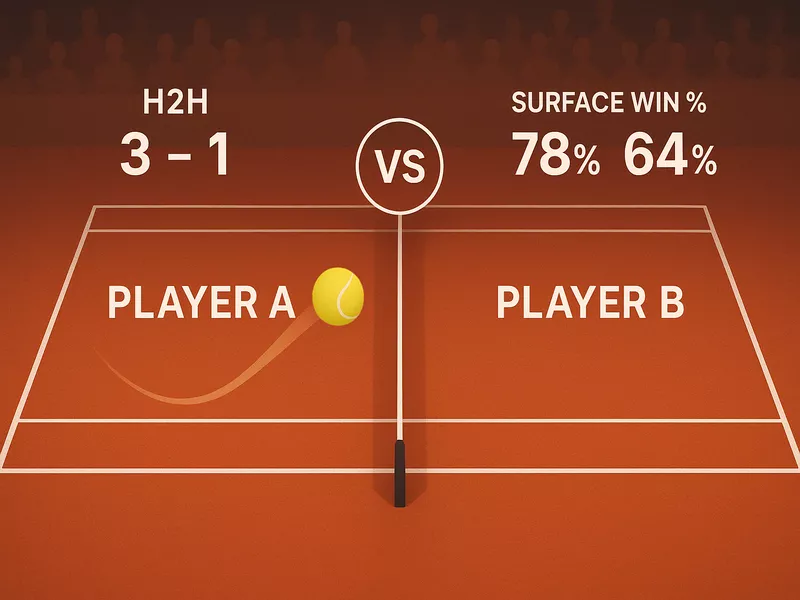
Tennis is underrated for accumulators, and I think that’s because people overcomplicate it. They worry about retirements, they stress about different surfaces, they overthink the rankings.
But fundamentally, tennis offers something beautiful for accumulator betting: binary outcomes. Someone wins, someone loses. No draws. No multi-way markets. Just clean, simple probability.
Why tennis works for accumulators:
Grand Slam early rounds are goldmines. You’ve got top players facing opponents ranked 100+ in the world. In best-of-five sets, the superior player almost always wins. Not always—upsets happen—but with high enough probability that you can build solid accumulators.
Head-to-head records matter enormously. Some players consistently beat certain opponents regardless of current form. If Player A is 8-1 against Player B historically, that tells you something real about the matchup.
Surface specialization is predictable. Clay court specialists struggle on grass. Hard court players hate clay. If you understand surface dynamics, you can spot mismatches that the general public overlooks.
Match scheduling provides context. A player competing in their third match in three days is compromised compared to a fresh opponent. This fatigue factor is knowable and often underpriced in the odds.
The markets that make sense:
Match winner is straightforward. Pick who wins the match. In early rounds against massive favorites, this is usually clear.
Set betting can offer value. Predicting the score in sets rather than just the winner sometimes has better odds for the same outcome.
Game handicaps are like Asian handicaps in football. The favorite has to win by more than X games. This can be useful when backing heavy favorites where straight match winner odds are too short.
The retirement problem:
Tennis retirements can kill accumulators if your bookmaker counts them as losses. Always check the terms. Some bookmakers void legs where a player retires, treating it as if the bet was never placed. Others count retirements as losses for anyone who backed the retiring player.
If your bookmaker voids retirements, tennis becomes more attractive for accumulators. If they count them as losses, you need to factor in retirement probability when building your accumulator.
Players with injury histories or recent fitness concerns are retirement risks. Check the news before finalizing your selections.
Surface matters more than casual fans realize:
Novak Djokovic is brilliant on all surfaces but particularly dominant on hard courts. Rafael Nadal is basically unbeatable on clay but more vulnerable on grass. Roger Federer was the grass master.
When building tennis accumulators, check what surface the tournament is being played on. Don’t just rely on overall rankings—look at surface-specific performance.
A player ranked 20th overall might be top-10 on clay and outside top-50 on grass. Context matters.
The tournament tier affects predictability:
Grand Slams are most predictable in early rounds because of the ranking gap and best-of-five format. Masters 1000 events are similar but best-of-three, slightly less predictable.
ATP 250 and 500 events see more upsets. Top players don’t always show up in peak form, treating them as preparation for bigger tournaments.
Challenger events are chaos. Don’t bet on them unless you genuinely understand the player pool at that level.
Building tennis accumulators strategically:
I focus on Grand Slam first and second rounds almost exclusively. The favorites are heavily favored for good reason, the format favors class, and I can build four or five selections with reasonable combined odds.
Mixing surfaces is fine as long as you’re accounting for surface-specific form. Don’t just throw in five random favorites from different tournaments without understanding their surface preferences.
Check scheduling. A player who finished a three-set thriller late last night and is back on court this afternoon is compromised. The odds might not reflect this fatigue fully.
Basketball: High-Scoring Consistency Meets Accumulator Format
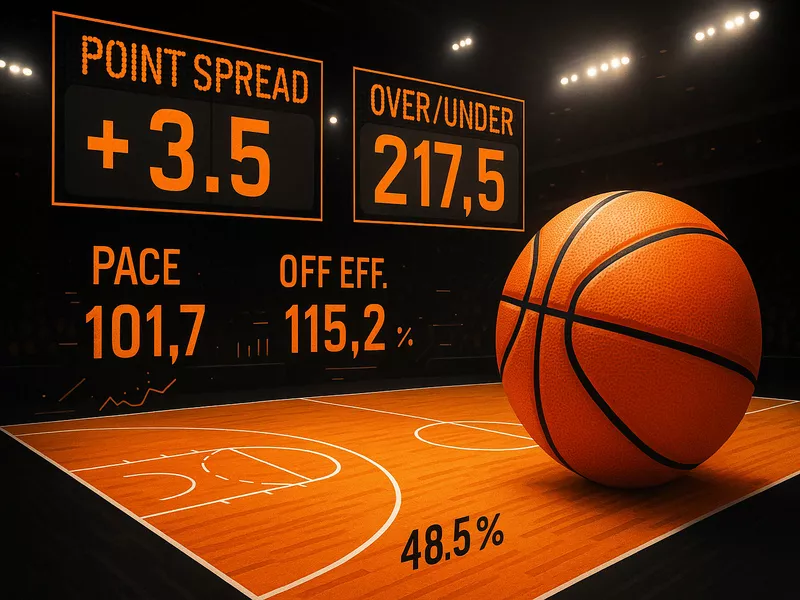
Basketball is interesting for accumulators because of how scoring works. High-scoring games with lots of possessions means outcomes are more predictable than low-scoring sports where one lucky bounce decides everything.
In football, one deflected goal can change a match. In basketball, teams are scoring 90-110 points. Individual variance smooths out over that many scoring opportunities.
Why basketball can work:
Point spreads are reliable betting markets. NBA teams are professionals with fairly consistent performance levels. The handicap market is well-developed and relatively efficient but still offers opportunities.
Over/under totals are popular for good reason. Team pace and offensive efficiency are measurable and fairly predictable. Some matchups are clearly going over the line, some are clearly staying under.
Team news matters but is usually available. NBA injury reports are public and detailed. You know who’s playing before you bet, unlike some football markets where team news drops late.
The season is long enough that statistical patterns emerge. By midseason, you have enough data to make informed predictions about team performance in different situations.
The markets that make sense:
Point spread accumulators can work if you’re selective. Backing strong teams with reasonable handicaps against weaker opponents. Not massive spreads that require blowouts, but modest handicaps that good teams regularly cover.
Over/under totals are my preferred basketball accumulator market. Analyzing pace, offensive efficiency, defensive ratings, and recent scoring trends gives you an edge if you’re thorough.
Moneyline (match winner) with favorites is straightforward but offers short odds. You need to combine several selections to get decent returns, which means more ways to lose.
The challenges with basketball accumulators:
NBA games are expensive to bet on in terms of bookmaker margin. The market is sophisticated, well-analyzed, and edges are thin.
Injury news can break late and significantly impact games. A star player being ruled out at the last minute completely changes the dynamics.
Back-to-back games affect performance. Teams playing their second game in two nights are compromised, especially if traveling. This is knowable but requires checking schedules.
Playoff basketball is different from regular season. Intensity increases, rotations shorten, and statistical patterns from the regular season don’t always translate.
European basketball offers opportunities:
Euroleague and domestic European leagues are less analyzed than the NBA. The markets are softer, edges are bigger if you’re willing to learn the leagues.
The basketball is lower quality than NBA, but that’s actually fine for accumulator purposes. You’re not watching for entertainment—you’re finding value in less efficient markets.
My honest assessment:
Basketball accumulators can work, but they require more specialized knowledge than football. If you’re not willing to learn the sport properly, opportunities exist in other sports with flatter learning curves.
If you do know basketball well, the accumulator format can be profitable. The combination of high scoring, statistical predictability, and decent markets creates genuine opportunities.
Sports That Don’t Work Well for Accumulators
Not every sport is suitable for accumulator betting. Some have characteristics that make the format terrible regardless of how much research you do.
Cricket is brutal for accumulators. Match conditions change everything. A pitch that’s perfect for batting on day one might be a minefield on day five. Weather impacts are huge—one rainy day can completely change match dynamics. Test matches last five days with constantly shifting probabilities. T20 is better but still has massive variance from individual performances.
American football is tricky. The week between games means form is harder to assess. One injury can devastate a team for the season. Point spreads are sharp because the market is sophisticated. The sample size of games is tiny—one bad week and your team’s playoff chances are shot.
Combat sports are terrible for accumulators. MMA and boxing have tiny sample sizes of fights. One punch changes everything. There aren’t enough simultaneous events to build proper accumulators. The odds on favorites are atrocious, and backing underdogs is just hoping for chaos.
Golf can work but requires patience. Tournament golf takes four days, so your accumulator is tied up for ages. Field sizes are huge, which creates opportunities, but also means tons of variance. Weather affects different parts of the field differently. The cut means half your selections might not even finish the tournament.
Darts and snooker are entertainment bets, not serious accumulator sports. Markets are thin, edges are non-existent for casual bettors, and variance is high relative to the information available.
The pattern is clear: sports with high variance, long time horizons, significant external factors beyond team control, or insufficient simultaneous events don’t work well for accumulators.
Multi-Sport Accumulators: The Best and Worst Combinations
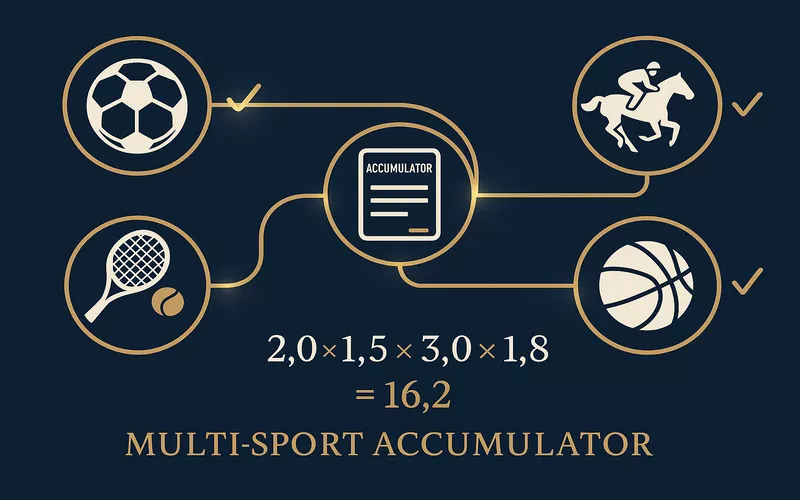
Some bettors like mixing sports in one accumulator. A couple of football matches, a tennis match, a horse race, all combined into one bet.
This can work, but you need to be strategic about which sports you’re combining and why.
Combinations that make sense:
Saturday football and horse racing is the classic UK accumulator combination. Both happening simultaneously, both offering decent markets, both allowing proper research. This can work if you’re knowledgeable about both sports.
Tennis Grand Slam with football midweek matches gives you options when football fixtures are light. Both are analyzable sports with reasonable predictability if you do the work.
Combinations to avoid:
Don’t mix short-term and long-term events. Combining a Saturday football match with a four-day golf tournament means your accumulator is tied up for ages. Take your profit or loss on the football and move on.
Don’t mix well-researched selections with punts. If you’ve thoroughly analyzed three football matches and then throw in a random tennis match because you need one more leg, you’ve undermined the whole accumulator.
Don’t mix sports you understand with sports you don’t. Your basketball knowledge doesn’t transfer to cricket. Either learn both properly or stick to what you know.
The golden rule:
Every sport in your accumulator should be one you’re knowledgeable about and have properly researched. Mixing sports is fine if you’re meeting that standard across all selections. If you’re not, you’re just adding noise and reducing your probability of success.
Best Sports for Accumulators: Summary and How to Pick the Right Markets
The best sport for accumulator betting isn’t the one you like watching most. It’s the one where you can consistently find value, where your research gives you an edge, and where the market dynamics suit the accumulator format.
Football works brilliantly when you avoid the most popular matches and focus on less efficient markets. Horse racing is perfect for each-way accumulators with large fields and generous place terms. Tennis offers binary simplicity with predictable early-round matches. Basketball provides statistical consistency in high-scoring environments.
But the real answer is personal. The best sport for your accumulators is the one you’re willing to learn properly. Where you’ll do the research, track the results, and develop genuine expertise over time.
Most bettors stick to one sport because it’s familiar. They’re missing opportunities but also avoiding the trap of spreading themselves too thin. There’s wisdom in specialization.
My advice? Pick one or two sports maximum. Learn them properly. Develop genuine expertise. Build your accumulators exclusively in those sports until you’re consistently profitable.
Then, and only then, consider expanding to other sports. But only if you’re willing to put in the same research effort that made you successful in your first sport.
The grass isn’t greener in other sports. The opportunity is better in whichever sport you’re willing to master.
See also: accumulator-bet – all about accumulator betting.
See also: Winning Accumulator Betting Strategies – strategies tailored to each sport.
Expertly verified: Mason Wright