
Accumulator Betting Tips: Expert Advice for Consistent Wins

Table of Contents
- Accumulator Tips: Why Expert Advice Changes Your Betting Results
- Start with the End in Mind: Know Your Exit Strategy Before You Bet
- The Weekend Trap: Why Saturday Accumulators Are Usually Bad Value
- The Two-Selection Rule: Never Combine These in One Accumulator
- The Forgotten Factor: Why Referee Appointments Matter More Than You Think
- The Odds Sweet Spot: Why 1.5 to 2.0 Is Your Target Range
- The Anti-Hype Strategy: Fade the Public When Everyone Agrees
- The Three-Match Rule: Research Depth Required for Each Selection
- Team News Timing: The 60-Minute Window That Changes Everything
- The Accumulator Journal: Why Tracking Matters More Than Winning
- Accumulator Tips: Summary and How to Apply These Strategies Today
Accumulator Tips: Why Expert Advice Changes Your Betting Results
Right, let’s cut through the nonsense. You’ve probably read a dozen accumulator betting tips articles that all say the same generic rubbish. “Do your research.” “Don’t bet more than you can afford to lose.” “Shop around for the best odds.” Yeah, cheers for that groundbreaking advice.
Here’s what those articles won’t tell you: most accumulator betting tips are either blindingly obvious or completely useless. They’re written by people who’ve never placed a serious accumulator in their lives, regurgitating the same tired advice that’s been recycled through countless betting blogs.
I’ve been betting on accumulators for over a decade. Not as some weekend hobby where I chuck a fiver on random matches, but as someone who’s genuinely tried to develop an edge. I’ve lost more accumulators than I care to count. I’ve also hit enough winners to know what actually works versus what sounds good but achieves nothing.
The difference between winning and losing at accumulator betting isn’t some secret formula. It’s not about having insider knowledge or being naturally lucky. It’s about understanding dozens of small factors that individually seem insignificant but collectively determine whether you’re profitable or not.
Some of what I’m about to share will contradict conventional wisdom. Some of it will seem counterintuitive or even wrong at first glance. But it’s all based on actual experience the hard-earned lessons that come from placing thousands of accumulators and meticulously tracking the results.
This isn’t entertainment. It’s not a get-rich-quick scheme. Accumulator betting is difficult, and anyone telling you otherwise is lying to sell you something. But with the right approach, you can shift the odds slightly more in your favor.
So forget everything you think you know about accumulator betting tips. We’re starting fresh with advice that actually makes a difference.
Start with the End in Mind: Know Your Exit Strategy Before You Bet
This is the tip that separates strategic bettors from gamblers who pretend they have a strategy. Before you place any accumulator, you need to know exactly under what circumstances you’ll cash out, hedge, or let it ride.
Most punters place their accumulator on Saturday morning and then make decisions reactively as matches unfold. By Sunday evening, they’re making emotional choices about whether to cash out based on how nervous they feel, not based on mathematics or strategy.
Here’s what you should do instead. Before placing your accumulator, write down your exit strategy. Literally write it down. Not in your head where it can shift and change based on your mood. On paper or in a notes app. Something concrete.
Your exit strategy might look like this: “If three legs win and I’m facing two remaining legs, I’ll cash out if the offer is above 60% of maximum return. If four legs win and I’m facing one remaining leg with odds below 1.8, I’ll hedge by backing the opposite outcome.”
The specific numbers don’t matter. What matters is that you’ve made these decisions before your emotions get involved. Because once you’re deep into a winning accumulator, your brain floods with dopamine and your decision-making ability goes out the window.
I’ve seen people turn down 70% cash-out offers on the final leg because they got greedy, only to watch that final leg lose. I’ve also seen people cash out at 40% because they panicked, then watched their final selection cruise to victory. Both scenarios are entirely predictable emotional reactions.
Having a predetermined exit strategy removes emotion from the equation. You follow your plan. You don’t second-guess yourself. You don’t get influenced by other people’s opinions or by temporary feelings of fear or greed.
This single tip probably has a bigger impact on long-term profitability than any other advice in this article. Because it’s not about picking better selections. It’s about not sabotaging your own selections through emotional decision-making.
Write down your exit strategy. Every single accumulator. No exceptions.

The Weekend Trap: Why Saturday Accumulators Are Usually Bad Value
Saturday afternoon accumulator betting is a tradition in the UK. Multiple Premier League matches kicking off simultaneously, the perfect setup for a cheeky acca down the pub. Everyone does it.
That’s exactly why you shouldn’t.
When everyone’s betting on the same matches at the same time, the market becomes incredibly efficient. Bookmakers have devoted enormous resources to pricing Saturday 3pm Premier League kick-offs accurately. They know these matches attract the most recreational betting, so they sharpen their odds and reduce margins where they need to be competitive.
This doesn’t mean value never exists in Saturday accumulators. But it means you’re competing with thousands of other punters, sophisticated betting syndicates, and bookmakers who’ve spent all week preparing their prices. Finding genuine value in this environment is hard.
Compare that to a midweek Championship match between two mid-table teams. Far fewer people are betting on it. The bookmakers have devoted less time to pricing it perfectly. The odds might be slightly off because there’s less market pressure to correct them.
Or consider matches in lower leagues League One, League Two, Scottish Premiership outside of Celtic and Rangers. These markets are nowhere near as efficient. Bookmakers set odds based on general principles rather than deep analysis. If you’re willing to do proper research, you can find edges here that simply don’t exist in Premier League matches.
This doesn’t mean never bet Saturday accumulators. Sometimes the matches align well with your research and you find genuine value. But it does mean questioning whether you’re betting on Saturday matches because they offer the best value or just because they’re convenient.
The best accumulator bettors I know deliberately avoid the most popular matches and time slots. They focus on Tuesday night matches in less glamorous leagues where their research gives them an actual edge.
Think about it this way: you’re competing against the market. If you want to beat the market, you need to be looking in places where the market isn’t looking. Saturday 3pm Premier League kick-offs are not those places.
The Two-Selection Rule: Never Combine These in One Accumulator
There are certain combinations that should never appear together in the same accumulator. These aren’t obvious incompatibilities they’re subtle factors that increase your probability of complete failure.
Never combine teams from the same league in relegation battles. If you’re backing two teams fighting relegation, you’re essentially betting on form holding in the most volatile situation in football. Relegation battles are chaotic and unpredictable. One can work. Two in the same accumulator? You’re asking for trouble.
Never combine derby matches with routine fixtures. Derby matches have their own logic. Form goes out the window. Motivation and emotion dominate. If you’ve got a local derby in your accumulator alongside three “normal” matches, that derby becomes your biggest risk factor.
Never combine heavy favorites with value selections. If you’ve done proper research and found three genuine value bets at around 2.0 odds each, that’s a solid accumulator. Adding in a 1.2 favorite “for safety” actually reduces your expected value because that favorite almost certainly isn’t value it’s just short odds.
Your accumulator should be coherent. Either it’s all value selections that you’ve researched thoroughly, or it’s something else. Mixing strategies within one accumulator dilutes your edge.
Never combine matches where weather is a significant factor. If you’re betting on matches in different countries and one of them is facing terrible weather conditions, that match operates under different parameters from the others. Rain, wind, snow can completely change how a match plays out.
Never combine matches with vastly different kick-off times if late team news matters. Say you’ve got a match kicking off Saturday lunchtime and another Sunday evening. If you’re betting Friday night, you’ve got complete team news for neither.
The principle behind all these rules is the same: each selection in your accumulator should operate under similar conditions and similar levels of predictability. When you start mixing fundamentally different types of bets, you’re introducing additional unpredictability that works against you.
The Forgotten Factor: Why Referee Appointments Matter More Than You Think
This is the tip that most casual bettors completely ignore because it seems too granular to matter. But referees have measurable, consistent patterns in how they officiate matches. And those patterns absolutely affect outcomes.
Some referees give significantly more yellow cards than average. Some are quick to award penalties. Some let physical play continue while others blow for every little contact. These aren’t random variations they’re consistent tendencies that you can research.
Say you’re betting on “under 2.5 goals” in a match. You’ve researched the teams, analyzed their form, checked their head-to-head record. Everything points to a low-scoring match. But then you check the referee appointment and discover it’s someone who averages 4.2 yellow cards per match well above the league average.
That matters. A card-happy referee changes the flow of the match. Players are more cautious in challenges. The game becomes more stop-start, with less fluid attacking play. This actually supports your under 2.5 goals bet.
Conversely, if you’re backing “both teams to score” and the appointed referee has a reputation for waving play on and letting physical contests continue, that’s relevant information. Defensive play becomes easier when referees allow more contact.
This doesn’t mean referee appointments should be your primary research factor. But they should be part of your checklist, especially when you’re making decisions about marginal selections.
Most bookmakers’ websites don’t list referee appointments prominently, but specialized football stats websites do. Spend five minutes checking who’s refereeing your matches. Look at their stats from this season. Are they significantly above or below average in key metrics?
If you’re building an accumulator with four or five selections and you haven’t checked the referee appointments for any of them, you’re leaving value on the table. This small additional research takes minutes but provides information that most bettors aren’t considering.
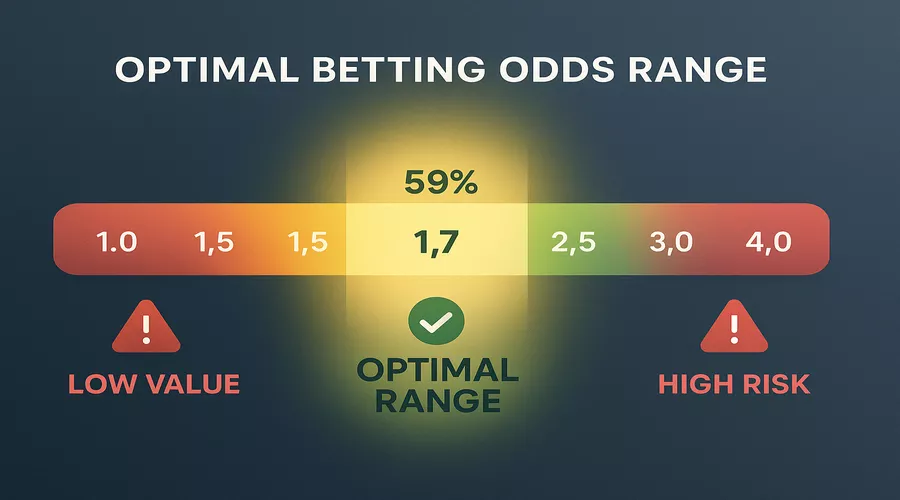
The Odds Sweet Spot: Why 1.5 to 2.0 Is Your Target Range
There’s a particular odds range where accumulator selections work best, and understanding why will change how you build your bets.
Selections below 1.5 odds are almost never value. They’re short-priced favorites where the bookmaker has shaded the odds to account for the public’s tendency to overbet favorites. Yes, they win more often. But not often enough to justify the poor odds.
Selections above 3.0 odds are genuinely risky. They’re underdogs for good reasons, and while occasionally they win, combining multiple longshots in an accumulator is just buying a lottery ticket with extra steps.
The sweet spot is 1.5 to 2.0 odds. At this range, you’re betting on outcomes that are reasonably likely but not overwhelming favorites. A team at 1.7 odds has roughly a 59% implied probability of winning. That’s better than a coin flip, but not by a huge margin. This is where research and analysis can actually find edge.
Bookmakers spend less time perfecting odds in this range because they’re focused on the extremes. The middle range gets less attention, which means value exists for those willing to look.
When you combine four selections in the 1.5 to 2.0 range, your combined odds end up somewhere between 5.0 and 16.0 depending on the specific prices. That’s a respectable return without being completely unrealistic.
Compare that to combining four selections at 1.2 odds. Combined odds of around 2.1. Terrible return for the risk. Or combine four selections at 3.0 odds. Combined odds of 81. Looks amazing on paper, but your probability of winning is basically zero.
The 1.5 to 2.0 range also has a psychological benefit. When your selections are around evens or slightly better, you’re less likely to talk yourself into bad bets. Each selection needs to stand on its own merits.
This isn’t a hard rule. Sometimes genuine value exists outside this range. But as a general principle, most of your accumulator selections should cluster around 1.5 to 2.0 odds.
The Anti-Hype Strategy: Fade the Public When Everyone Agrees
When absolutely everyone thinks the same outcome is certain, that’s often your signal to go the other way. Not always, but often enough that it’s worth considering.
This is contrarian betting, and it works in accumulators for a specific reason: when public opinion heavily favors one outcome, bookmakers shade the odds to protect themselves. The favorite’s odds shorten beyond what’s mathematically justified. The underdog’s odds lengthen to become genuine value.
Say there’s a match where the big-name team is expected to cruise to victory. All the casual bettors are piling on the favorite. The bookmaker has moved the odds from 1.4 to 1.25 to manage their liability. Meanwhile, the underdog has drifted from 4.0 to 5.5.
That’s opportunity. The underdog probably isn’t going to win. But at 5.5 odds, they don’t need to win very often to be value.
I’m not suggesting you fill your accumulators with massive underdogs just because they’re unfashionable. But when you’re doing your research and you identify a potential selection where the public sentiment seems massively one-sided, dig deeper.
Ask yourself: why is everyone so confident? Is it based on solid evidence, or is it just because the big-name team is playing the small-name team? Are people overreacting to recent results without considering context?
Sometimes the consensus is correct. Manchester City really are going to beat the bottom team. But other times, the consensus is lazy thinking that creates value on the other side.
This is particularly relevant in matches involving big-name teams in poor form. The public has a bias toward backing teams they’ve heard of, even when those teams are struggling. That creates opportunities to either fade the big name or avoid including them when everyone else thinks they’re “guaranteed.”
The contrarian approach isn’t about being different for the sake of it. It’s about recognizing when public opinion has moved odds away from their true value, and taking advantage when it has.
The Three-Match Rule: Research Depth Required for Each Selection
Every selection in your accumulator needs a minimum level of research, and there’s a three-match rule that helps ensure you’re not just guessing.
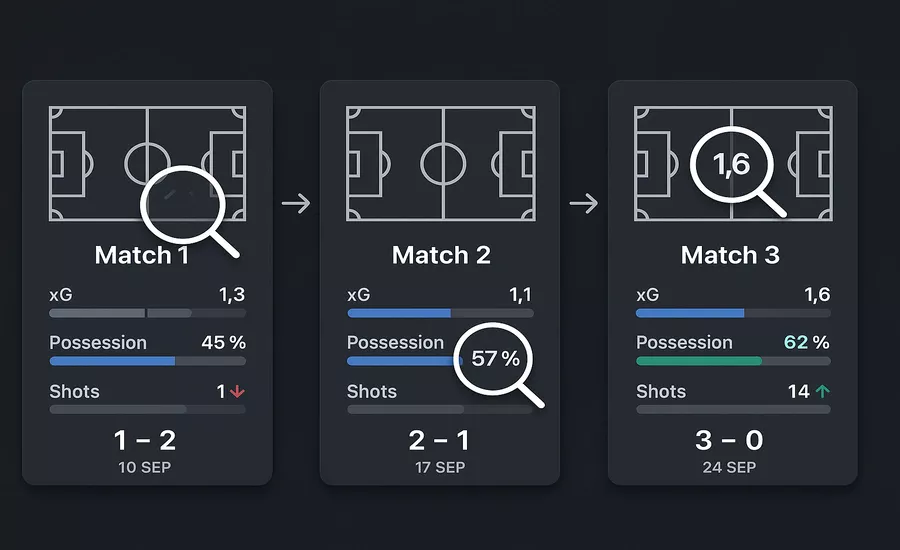
Before including any team in your accumulator, you should have watched or reviewed at least their last three matches. Not just looked at the results. Actually watched the matches or reviewed detailed match reports and statistics.
Why three? Because one match can be an anomaly. Two matches might be a coincidence. Three matches reveal a pattern.
Say a team won their last match 3-0. Looks great on paper. But if you’d watched the match, you’d know they were outplayed for 70 minutes and scored three late goals against ten men. That’s not a team in good form. That’s a team that got lucky.
Three matches give you context. You can see if their current approach is sustainable. You can identify if they’re carrying injuries that might get worse. You can spot tactical patterns that opponents might exploit.
This doesn’t mean you need to sit through entire 90-minute matches for every selection. Football statistics websites provide expected goals data, shot maps, possession statistics, and more. You can get a detailed picture of how a team actually performed without watching every minute.
But you do need to go beyond just looking at results. “Won 2-1” tells you almost nothing useful. “Won 2-1 despite being dominated, xG was 0.8 to 2.3 against them” tells you something actionable.
The three-match rule also prevents you from overreacting to one exceptional result. Maybe a team just beat the league leaders. Impressive. But before you rush to back them, check their previous two matches. Maybe they scraped a draw against a relegation candidate and lost at home to mid-table opposition.
This level of research is work. Proper work. Most casual bettors can’t be bothered, which is exactly why most casual bettors lose.
Team News Timing: The 60-Minute Window That Changes Everything
Team news breaks at different times depending on the competition. In the Premier League, teams announce their starting lineups one hour before kick-off. Other leagues vary.
Here’s the problem: if you place your accumulator early say Friday evening for Saturday matches you’re betting blind on team selection. And team selection matters enormously.
A key player being rested or injured can completely change a match. If you’ve backed Arsenal to win but you don’t know that their best striker isn’t starting, you’ve made an uninformed bet.
The solution is simple but requires discipline: place your accumulators as late as possible while still getting the odds you want. Ideally within that 60-minute window after team news is announced but before odds shift significantly.
This creates a problem, obviously. You’ve done your research throughout the week, identified your selections, and now you need to wait until the last minute to place the bet. In that time, odds might have moved against you.
Sometimes they do. That’s fine. If the odds have shortened significantly, it’s probably because other informed bettors have spotted the same value you did. Don’t force the bet just because you spent time researching it.
But often, odds don’t move much in that 60-minute window. Most recreational bettors place their accumulators hours or even days in advance. You’re operating in a less crowded market by waiting.
The other advantage is that you can adjust your accumulator based on team news. Maybe you were planning to back Team A, but their star player isn’t starting. You can pivot to a different selection or skip that match entirely.
This requires being organized and having your research done in advance. But it’s one of the few genuine edges available to disciplined bettors.
Set alerts for team news. Follow reliable sources on social media. Check starting lineups before finalizing your accumulator. It seems like a small thing, but small things compound.
The Accumulator Journal: Why Tracking Matters More Than Winning
This tip sounds boring. It is boring. But it’s also the difference between improving over time and repeating the same mistakes indefinitely.
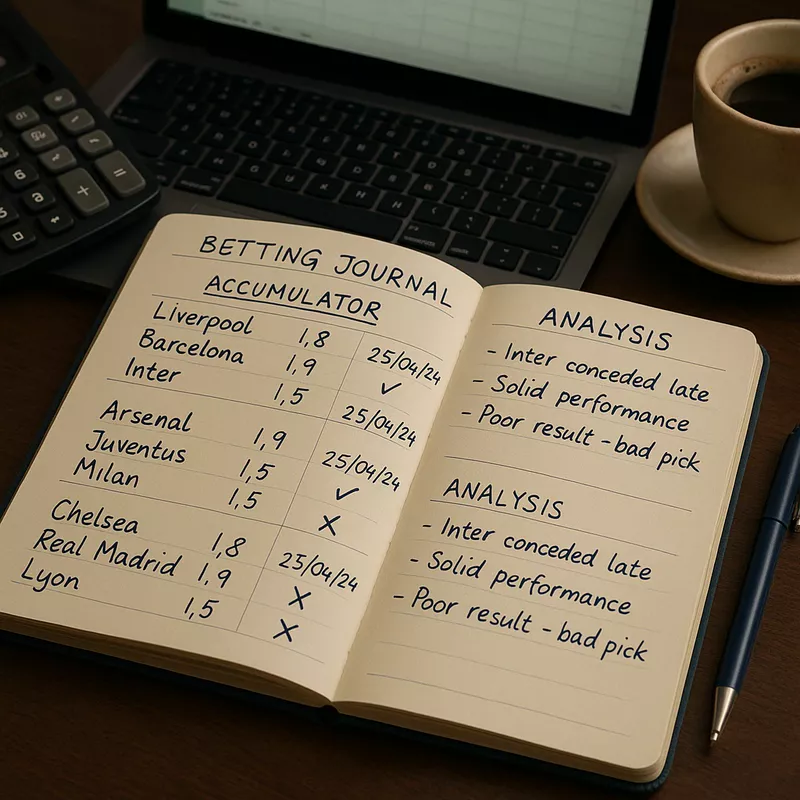
Keep a detailed journal of every accumulator you place. Not just whether it won or lost, but the reasoning behind each selection, the odds at time of placement, any relevant factors that influenced your decision.
When the accumulator settles, review it. What went right? What went wrong? Were there warning signs you missed? Did you get unlucky with genuine value bets, or did you make poor selections?
This post-mortem analysis is how you actually improve. Most bettors place an accumulator, watch it lose, feel gutted for a bit, then move on and place another one with no reflection.
Here’s what a journal entry might look like:
“Five-fold accumulator, £10 stake. Combined odds 12.4. Lost on leg 4.
Leg 1: Liverpool vs Everton, Liverpool -1 Asian Handicap at 1.8. Won 2-0. Correct assessment.
Leg 2: Arsenal vs Brighton, Over 2.5 goals at 1.9. Won 3-2. Correct.
Leg 3: Chelsea vs Forest, Chelsea to win at 1.5. Won 2-1. Selection added for odds boost rather than strong conviction. Should not have included.
Leg 4: Manchester United vs Wolves, BTTS at 1.7. Lost 1-0. Overlooked that Wolves’ striker was doubtful. Failed to check team news properly. Critical error.
Lessons: Stop including selections just for odds boost. Always check injury news properly, especially for attacking players when betting BTTS.”
That level of detail seems excessive. But read through a dozen of those journal entries and patterns emerge. You discover that you consistently underestimate injury impacts. Or that you overrate home form.
Those insights are gold. They’re the specific ways you personally can improve, based on your actual betting patterns rather than generic advice.
Accumulator Tips: Summary and How to Apply These Strategies Today
Accumulator betting isn’t about one magic tip that suddenly makes you profitable. It’s about dozens of small improvements that collectively shift the odds slightly more in your favor.
Start with exit strategies before you bet. Avoid the weekend trap of oversaturated markets. Never combine incompatible selections. Research referee appointments. Target the 1.5 to 2.0 odds range. Consider contrarian value when everyone agrees. Apply the three-match research rule. Wait for team news. Keep a detailed journal.
None of these tips guarantee wins. Nothing does. But each one gives you a tiny edge, and those tiny edges compound over hundreds of bets into meaningful differences in profitability.
The gap between winning and losing at accumulator betting is narrower than most people think. It’s not about having special knowledge or being naturally lucky. It’s about being slightly more disciplined, slightly more thorough, and slightly more strategic than the competition.
Most bettors won’t implement any of these tips. They’re too much work, too boring, too conservative. They’ll keep placing random Saturday accumulators based on gut feeling and wonder why they keep losing.
Don’t be most bettors. Put in the work. Follow the process. Track the results. Over time, you’ll separate yourself from the crowd.
That’s how you win at accumulator betting. Not through magic formulas, but through consistent application of sound principles.
See also: accumulator-bet – your accumulator betting resource.
See also: How to Calculate Accumulator Odds – understand the maths behind your acca.
Expertly verified: Mason Wright